NAD+ Umbrella Labs Expands Research Use Only Access To Two Standardized Formats For High Rigor Redox, Metabolic Flux, And Mitochondrial Bench Science
TUCSON, AZ / ACCESS Newswire / March 11, 2026 / Umbrella Labs is providing NAD+ as a laboratory developmental research use only reference material intended for controlled experimental systems that interrogate redox balance, energy metabolism, and NAD+-dependent enzyme activity. This press release describes research considerations for NAD+ workflows where reproducibility depends on consistent identity fields, consistent storage assumptions, and consistent handling practices across repeated experiments.
NAD+ is central to bench research because it functions as an electron carrier in core metabolic reactions while also serving as a substrate for NAD+-consuming enzymes that generate signaling-relevant products. As a result, NAD+ studies often combine direct quantification of NAD+ and NADH with pathway markers that reflect turnover, compartmentalization, and stress-responsive remodeling of metabolic networks. Current lab discussions increasingly treat NAD+ as a system with inputs, regeneration capacity, and consumption pressure rather than a single static measurement.
Reproducibility in NAD+ experiments is frequently limited by procedural drift rather than by model selection. Differences in storage temperature history, timing of preparation, container interactions, and repeated handling events can shift delivered concentrations and distort comparisons across runs, especially in multi-omics designs and time-resolved sampling studies. A format-driven approach, where the same identity is provided in clearly defined physical forms, supports laboratories that need consistent execution across operators, benches, and study phases.
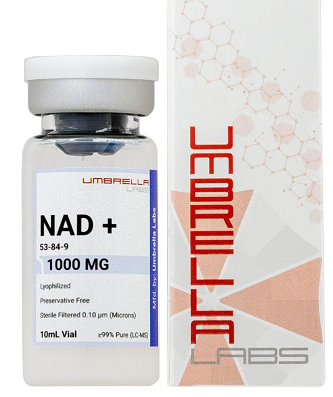
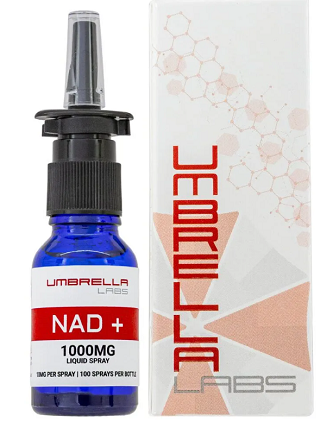
Umbrella Labs supports NAD+ research workflows in two formats because labs commonly split into two practical needs, controlled reconstitution for batch preparation and standardized liquid dispensing for repetitive additions during assay setup. The lyophilized NAD+ vial reference and its identity fields are documented at https://umbrellalabs.is/shop/peptides/peptide-vials/nad-plus-vial/ and the NAD+ liquid spray reference and its standardized dispensing format are documented at https://umbrellalabs.is/shop/peptides/peptide-liquid-sprays/nad-plus-liquid-spray/ so laboratories can cite a stable specification source inside study notebooks, internal method documents, and inventory records. In research settings, linking the exact format used to a fixed reference page reduces ambiguity when protocols are transferred, replicated later, or reviewed during troubleshooting. Both formats are intended for laboratory developmental research use only and are not intended for clinical, diagnostic, therapeutic, medical, veterinary, or household applications. Laboratories procuring NAD+ for research should apply their institutional handling and documentation procedures appropriate for biochemical reagents and the specific experimental platform in use.
Research background, NAD+ as a redox cofactor and a signaling substrate
NAD+ is classically discussed in redox biology as the oxidized member of the NAD+/NADH pair that enables hydride transfer reactions across glycolysis, the tricarboxylic acid cycle, and multiple dehydrogenase steps tied to substrate oxidation. In controlled experimental systems, shifts in NAD+/NADH ratio can reflect changes in substrate availability, mitochondrial respiratory capacity, oxygen availability, and the balance between cytosolic and mitochondrial redox demands. Because this ratio can change rapidly with experimental conditions, NAD+ studies often require strict control of sampling timing, rapid quenching, and consistent extraction procedures to avoid artifactual oxidation or reduction during handling.
At the same time, NAD+ is also a substrate for enzyme families that cleave NAD+ to generate products that influence cellular state. This creates a second axis of interpretation where NAD+ availability and turnover can correlate with downstream enzyme activity signatures. In bench research, these enzyme-linked pathways are often evaluated alongside redox measurements, because a perturbation may shift electron flow while simultaneously shifting NAD+ consumption pressure, producing complex patterns that are easy to misread if reagent preparation or sampling procedures are inconsistent.
A major theme in current lab discussions is compartmentalization. NAD+ pools in mitochondria, cytosol, and nucleus can be perturbed differently, and some platforms now measure compartment-specific dynamics using targeted sensors, fractionation workflows, or model systems designed to preserve organelle-level behavior. These designs amplify the need for consistent reagent identity and consistent preparation logic, because the measured differences can be subtle and timing-sensitive.
Why format matters in NAD+ bench workflows
In practice, laboratories select NAD+ format based on the structure of the workflow. A lyophilized vial format supports controlled reconstitution plans aligned to internal SOPs, enabling batch preparation, aliquoting strategies, and defined "time-since-prep" windows that can be replicated precisely across experiments. This is particularly useful in studies that run repeated timepoints, extended assay stacks, or multi-day validation cycles where the laboratory wants a single, well-documented preparation event to anchor multiple runs.
A standardized liquid spray format supports repetitive dispensing steps where operator-to-operator variability can dominate. In workflows that require frequent additions across many wells or vessels, small errors in repeated micro-additions can accumulate and create inconsistent delivered exposure. A metered actuation approach can be used as an SOP variable that is simple to document and simple to replicate, especially during method transfer between operators or benches.
Many research programs combine both approaches. A laboratory may validate an assay using a lyophilized batch-prep workflow to lock down concentrations and timing assumptions, then operationalize the same assay using a standardized liquid format to reduce day-to-day execution drift. In both cases, the purpose is not convenience, it is comparability, ensuring that differences in readouts track to experimental variables rather than to hidden differences in preparation.
Identity fields, documentation discipline, and what labs record for NAD+ experiments
High-quality NAD+ studies generally begin with clear identity and traceability. For NAD+, laboratories commonly record a consistent set of identity fields in procurement and experimental records, including CAS number, molecular formula, molecular weight, and an analytical purity statement where available. This is especially important in cross-platform projects where different teams run different layers of the data stack, such as one team running targeted metabolomics while another team runs functional respiration proxies or reporter assays.
Documentation discipline also includes recording the physical format used, the preparation logic, and the handling timeline. For lyophilized workflows, labs typically record reconstitution variables such as diluent specification used under institutional SOPs, container selection, mixing approach, aliquoting plan, and storage of intermediate stocks. For liquid dispensing workflows, labs typically record the dispensing scheme, actuation count or equivalent delivery variable, and any control steps used to verify consistency across a run.
When troubleshooting, these records can be the difference between a one-day correction and a multi-week uncertainty loop. NAD+ is a highly responsive variable in many systems, and uncontrolled procedural differences can present as a biological effect if the documentation chain is incomplete.
Analytical and experimental design considerations in NAD+ research
NAD+ measurements are frequently paired with NADH measurements, related intermediates, and redox state proxies. Labs often choose among enzymatic cycling assays, LC-MS workflows, targeted metabolomics panels, or sensor-based approaches depending on the model and the question. Each method has vulnerabilities that can be controlled with good execution discipline, including rapid quenching, consistent extraction timing, stable internal standards, and standardized storage of collected samples.
In redox perturbation designs, a common pitfall is the mismatch between the timing of the perturbation and the timing of sampling. Some NAD+ changes occur rapidly, while others reflect slower remodeling of metabolism and enzyme activity. Time-resolved designs can help, but only if preparation and sampling timing are consistent across runs. This is where standardized format and standardized preparation become foundational, because they reduce the probability that a "timing effect" is actually a "preparation-time" artifact.
Another common pitfall is plate and container interaction effects in low-volume work. Some workflows are sensitive to adsorption or surface interactions, particularly when working with low concentrations and repeated transfers. Labs often mitigate this by standardizing container types, minimizing transfer steps, and documenting the exact approach so repetitions remain comparable.
Storage and stability minded execution in NAD+ workflows
NAD+ workflows benefit from strict storage discipline because temperature history and repeated temperature excursions can complicate comparability. A reproducibility-forward program typically includes a defined storage temperature target, a controlled receiving procedure, and minimized time at ambient conditions during preparation. When studies run for weeks, differences in storage and handling history can become a confounder if they are not standardized.
Similarly, preparation timing matters. Labs often define a "preparation window" and standardize the time between preparation and experimental use, especially in time-resolved designs. For lyophilized workflows, this can mean preparing a defined batch and aliquoting immediately under SOP control. For liquid workflows, this can mean defining a consistent dispensing and staging procedure that minimizes variability during set-up.
In both cases, the goal is to prevent the NAD+ input itself from becoming a moving target. If the input is unstable or inconsistently handled, downstream redox readouts can shift in ways that make interpretation unreliable.
Research applications where NAD+ is commonly used as a reference input
NAD+ is widely used in studies that probe mitochondrial function and oxidative metabolism, including workflows that connect substrate oxidation to redox state and respiratory capacity proxies. NAD+ is also used in studies that evaluate stress-response remodeling, where changes in NAD+ turnover are tracked alongside transcriptional and protein-level markers of adaptation. In addition, NAD+ is used in systems that evaluate NAD+-dependent enzyme activity signatures, where NAD+ availability can be coupled to downstream pathway markers.
Because NAD+ intersects with many pathways, integrated study designs are increasingly common. A single project may include metabolite measurements, functional readouts, and marker panels across multiple timepoints. This is precisely the type of environment where standardized format and standardized documentation are most valuable, because an uncontrolled input can invalidate comparisons across assay layers.
Buying for research and procurement continuity as part of study design
Laboratories procuring NAD+ for research often plan procurement continuity across study phases. Early assay development, validation runs, and replication campaigns are most interpretable when the NAD+ reference input remains consistent in identity and format. Procurement continuity reduces the need for repeated revalidation and reduces the risk that an untracked change in material or format becomes the hidden variable driving an apparent effect.
Umbrella Labs provides NAD+ for research procurement with the expectation that laboratories will integrate identity fields, storage assumptions, and format selection into their internal documentation systems. This supports multi-operator execution, method transfer, and repeat experiments performed weeks later under comparable assumptions.
Research use only statement
NAD+ materials supplied by Umbrella Labs are provided strictly for laboratory developmental research use only. They are intended for qualified research environments operating under established institutional procedures for handling, documentation, and safety. These materials are not intended for clinical, diagnostic, therapeutic, medical, veterinary, or household applications, and terms of sale apply.
About Umbrella Labs
Umbrella Labs is a U.S.-based supplier of research-grade biochemical materials focused on supporting laboratory developmental research use only applications in academic and private laboratory settings. The company emphasizes documentation clarity, traceable identity fields, and reproducibility-aligned handling guidance so research teams can maintain consistent inputs across repeated experiments and multi-run bench workflows.
Media and Procurement Contact
Umbrella Labs
3280 E Hemisphere Loop
Tucson, AZ 85706
[email protected]
1-866-289-7276
SOURCE: Umbrella Labs
Information contained on this page is provided by an independent third-party content provider. XPRMedia and this Site make no warranties or representations in connection therewith. If you are affiliated with this page and would like it removed please contact [email protected]
