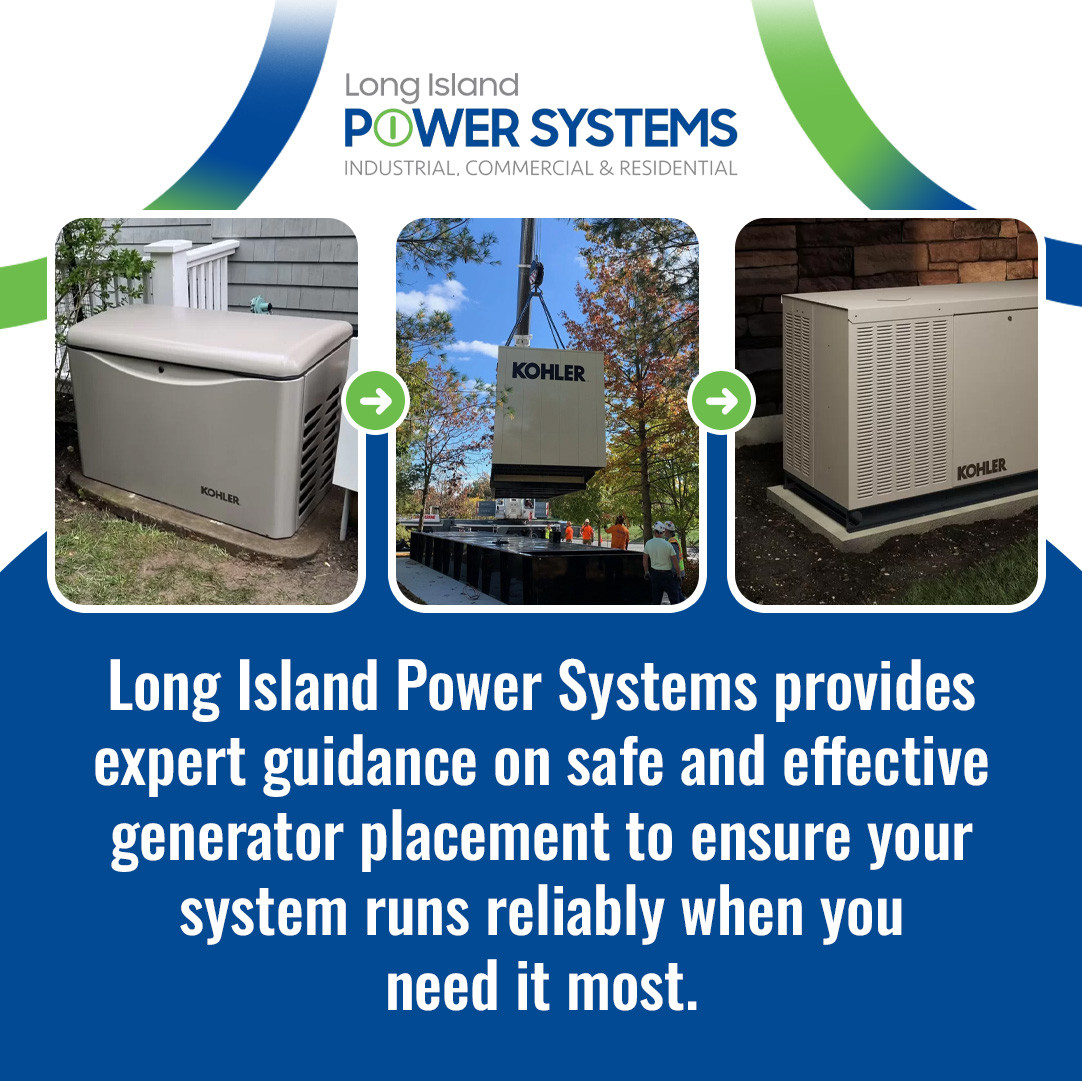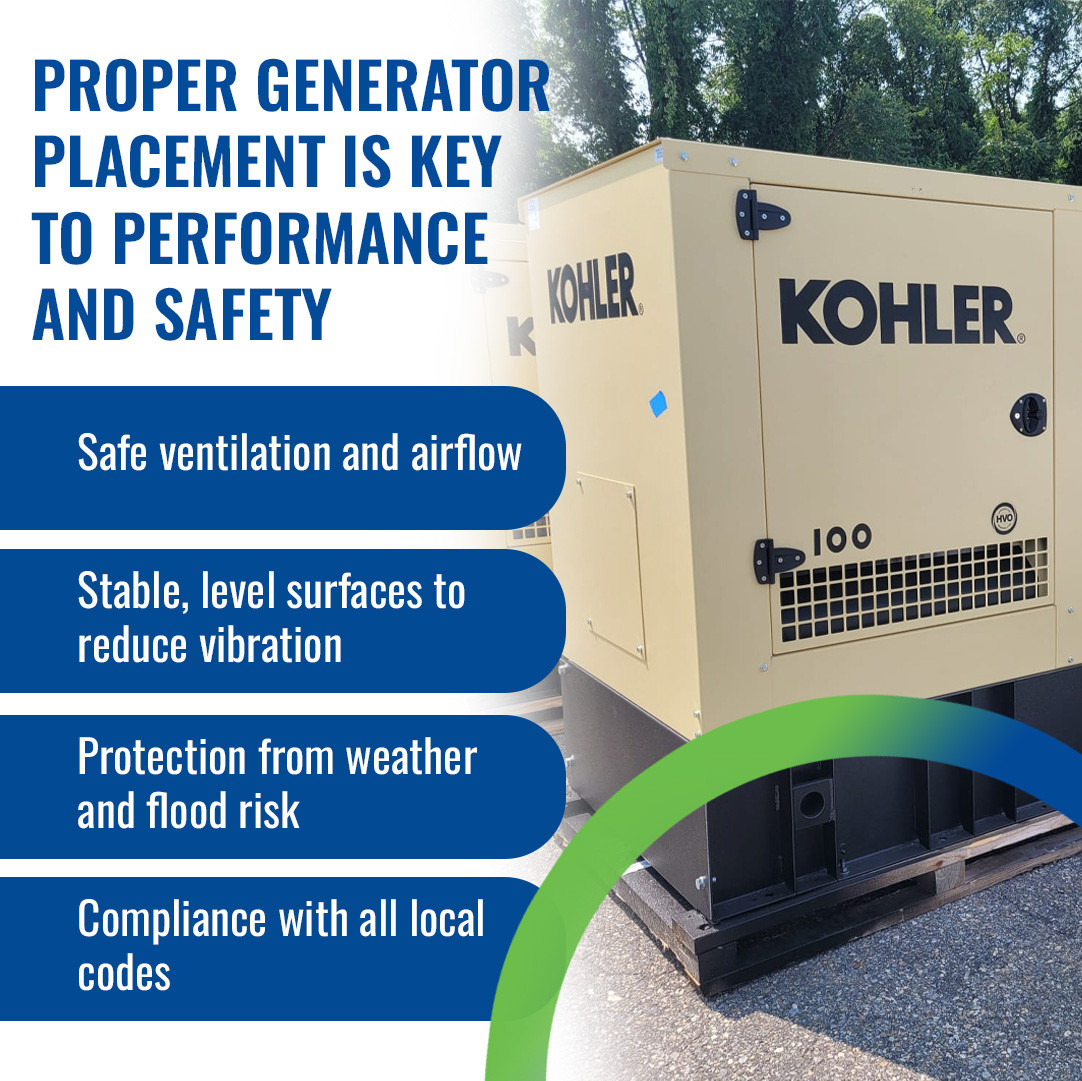
Southampton, New York – Long Island Power Systems provides professional backup generator services for residential and commercial properties across Long Island. The company specializes in installation and maintenance, helping homeowners select the best location for a backup residential generator. Proper placement supports safe ventilation, easy maintenance, and reliable operation, considering factors such as airflow, noise, clearance, and compliance with local building codes.

Basics of Generator Placement
Outdoor Installation for Proper Ventilation
A backup residential generator produces heat and exhaust during operation, which must move freely to prevent buildup. Installing the unit outdoors allows air to circulate through the system, keeping it cooler and reducing fumes near the home. Open areas also provide technicians with easier access for service without moving landscaping or equipment.
Stable Surfaces and Pad Requirements
Generators require a firm, level base for safe operation. A concrete or composite pad adds stability, reduces vibration, and protects internal components from shifting. Uneven ground can cause alignment issues, affecting connections and overall function. Elevated pads are especially helpful in areas prone to water accumulation or flooding.
Space for Routine Maintenance
Providing adequate space around the generator allows homeowners and technicians to perform regular inspections, refueling, and minor repairs comfortably. Sufficient clearance makes it easier to check fuel levels, test automatic transfer switches, and conduct routine cleaning without moving the unit or creating hazards.
Environmental Considerations for Placement
Environmental factors such as weather, drainage, and temperature can affect the performance and longevity of a backup power generator.
Weather Exposure
Generators exposed to wind, rain, or coastal conditions may experience increased wear over time. Placing units in sheltered areas or using small enclosures designed for outdoor generators can reduce exposure while allowing proper airflow.
Drainage and Flood Risk
Locating generators on elevated or well-drained ground prevents water accumulation that can damage electrical components. Dedicated pads or platforms help keep units above areas prone to flooding, especially in low-lying or coastal zones.
Temperature and Sunlight Effects
Direct sunlight and excessive heat can affect generator performance. Installing the unit in a shaded area helps maintain consistent operation. Cold temperatures may impact fuel and battery performance, so balancing sun exposure and protection is important throughout the year.
Property-Specific Placement Factors
Each property has unique features that influence generator placement. Homeowners should consider proximity to electrical panels, noise, and yard layout.
Proximity to Electrical Panels
Placing a generator near the main electrical panel reduces wiring length and supports consistent power delivery. Being reasonably close also makes installation and maintenance easier.
Noise Management
Generators produce sound while operating. Positioning them away from bedrooms, living areas, and outdoor spaces reduces disturbances. Fences, walls, or landscaping can further limit noise while maintaining access for service.
Yard Layout and Obstacles
Trees, sheds, fences, and other obstacles affect where a generator can be safely installed. Clear, open areas allow better airflow, reduce debris accumulation, and provide space for maintenance. Proper spacing also helps home backup generators operate effectively.
How Long Island Power Systems Supports Generator Placement
Long Island Power Systems, based in Southampton, NY, works with homeowners to provide practical solutions for backup power.
Personalized On-Site Consultation
The team conducts on-site evaluations to determine the most suitable location for a backup power generator. This approach accounts for airflow, clearance, and environmental conditions on the property.
Professional Installation Services
The company provides backup generator service on Long Island, positioning units properly and connecting them safely to fuel and electrical systems. Experience helps each generator operate smoothly and remain accessible for routine maintenance.
Adherence to Manufacturer and Local Codes
Long Island Power Systems follows all manufacturer recommendations and local regulations to help ensure safe installation. Compliance reduces the risk of operational issues or code violations.
Ongoing Maintenance Planning
The company works with homeowners to schedule inspections, refueling, and testing for backup residential generators. Planned maintenance helps units remain functional and accessible without disrupting property use.

Schedule a Backup Generator Consultation
Homeowners can contact Long Island Power Systems at (631) 283-4271 to discuss generator placement, installation, and ongoing maintenance. The team provides expert guidance for backup power generators across Long Island.