Understanding Drainage in Seminole Outdoor Projects
Homeowners in Seminole invest heavily in their outdoor spaces, seeking to create beautiful and functional yards that enhance their homes. Yet too many of these projects encounter the same frustrating problem: water pooling, eroded landscaping, and pavers that sink within months. The culprit is rarely the materials themselves, but rather the invisible infrastructure beneath them. Understanding how to avoid drainage problems when installing pavers and turf is essential for anyone considering outdoor upgrades. Proper drainage planning from the start prevents costly mistakes and ensures yards that work beautifully for years to come.
The Reality of Drainage Failures in Florida's Climate
Drainage problems don't happen by accident. They stem from overlooked planning and rushed execution during critical foundational stages. In Seminole and surrounding areas, the local climate and soil composition create unique challenges that demand careful consideration.
Florida's afternoon thunderstorms deliver intense rainfall in short bursts. A well-designed drainage system must handle this volume quickly, or water sits. When it does, problems multiply. Soil becomes compacted and soggy. Pavers settle unevenly. Landscaping erodes. Artificial turf can develop mold and mildew issues. Mosquitoes breed in standing water. What should have been a beautiful outdoor space becomes a liability.
The reality is that most drainage failures trace back to foundational oversights. Incorrect grading leaves yard slopes angled toward the house instead of away from it, creating natural collection points for water. Missing or undersized drainage infrastructure cannot handle storm volume. Poor base layer preparation fails to support paver structure or allow water infiltration. Inadequate subsurface drainage beneath turf prevents water from moving through the system efficiently.
These aren't issues homeowners can typically see or understand without professional guidance. Yet they're the difference between a yard that thrives and one that becomes a constant source of frustration and expense.
The Comprehensive Approach to Drainage-Ready Installations
Addressing drainage properly requires understanding how multiple systems work together. Professional site assessment is the first step. Before any work begins, a qualified evaluator examines slope, soil composition, water flow patterns, and existing drainage challenges. This determines how water naturally wants to move across your property.
Proper grading comes next. A minimum slope of 1 to 2 percent away from structures like your house, pool, and deck directs water toward designated outlets. Strategic swales and gentle valleys move water naturally toward collection points. This grading must be intentional and must integrate cleanly into the overall landscape design.
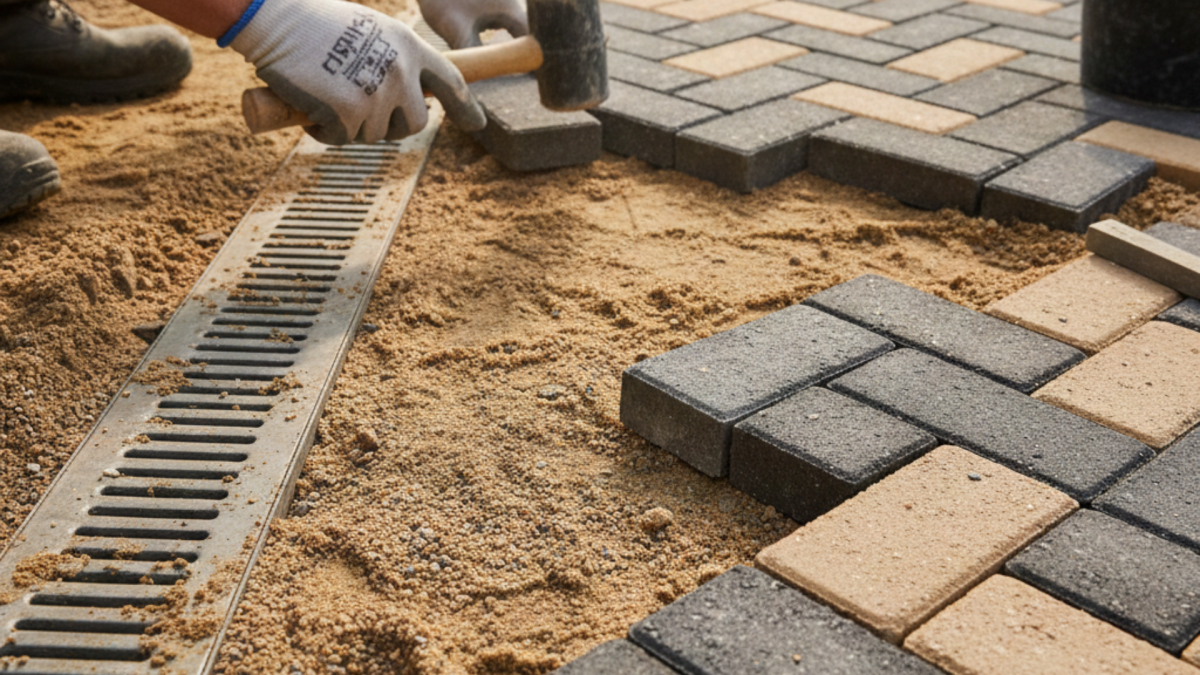
Base layer preparation differs for pavers versus turf but is critical for both. Paver bases require compacted subbase material, typically 4 inches of crushed stone. Landscape fabric prevents soil migration. Sand bedding supports proper paver placement. Permeable joint material between pavers allows water infiltration.
Artificial turf bases demand similar rigor. Proper excavation and compaction create the foundation. Perforated drainage pipes run beneath the turf base. High-quality backing materials allow water to flow through efficiently. Edge containment prevents lateral water escape.
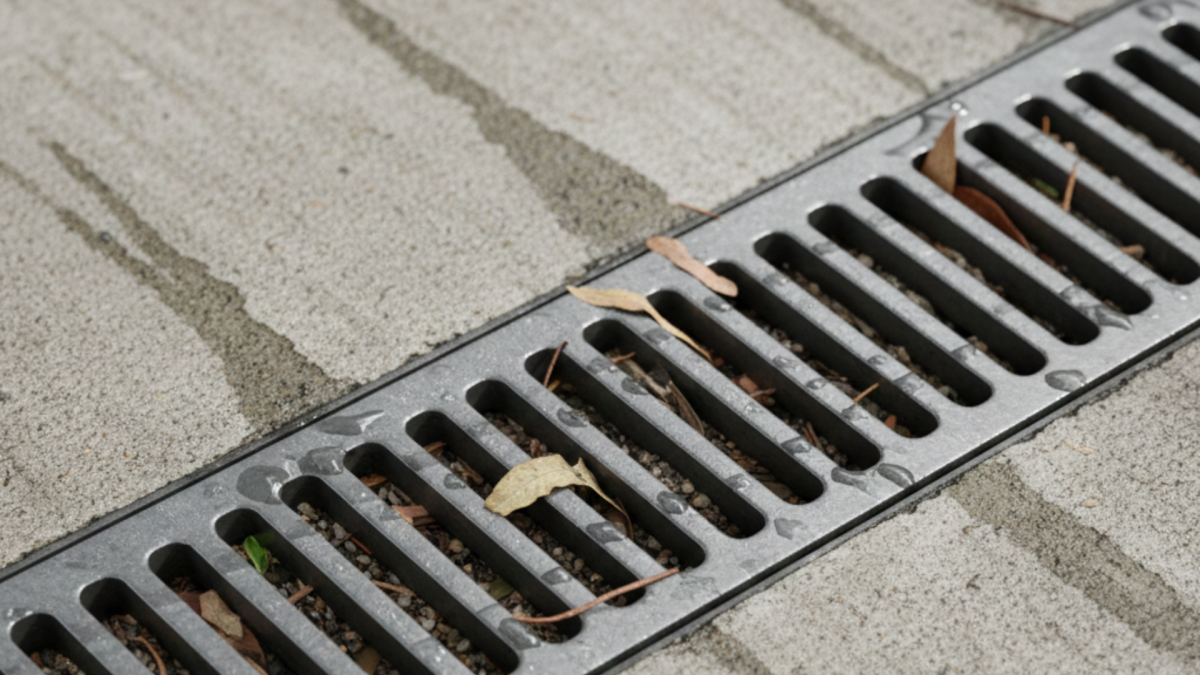
Drainage infrastructure integration is essential. Depending on property conditions and rainfall patterns, this might include French drains for areas collecting excess water, catch basins at low points to redirect runoff, perforated subsurface pipes beneath turf areas, swales to move water naturally, or dry wells to manage stormwater sustainably. These aren't optional additions. They're engineered components of a functioning system.
Artificial Turf and Drainage Reality
A common misconception persists. Artificial turf causes drainage problems. The reality is the opposite. Premium artificial turf, when installed correctly, drains significantly better than natural grass in most situations.
Modern synthetic turf manages drainage rates of 60+ inches per hour, compared to natural grass at 1 to 2 inches per hour. No thatch buildup means water moves through consistently. Engineered backing allows water to flow to the base layer. There's no soil compaction to impede water movement.
The critical catch is that none of this matters if the base layer doesn't drain properly. If turf is installed over compacted clay or a shallow base without subsurface drainage, water sits. When that happens, all the turf's superior drainage capability provides no benefit.
For properties with pools, high-quality artificial turf handles chlorine exposure well. Synthetic fibers don't absorb chemicals the way natural grass does. Proper drainage keeps chemical-laden water from pooling and damaging landscaping beneath.
Why Integration Matters More Than Individual Components
Here's what distinguishes successful outdoor transformations: integration. Turf, pavers, drainage, landscape lighting, and irrigation systems aren't separate projects. They're interconnected systems requiring coordinated planning.
When drainage is designed first, hardscape placement comes second, and irrigation is layered in third, everything works together seamlessly. When these elements are bolted together after the fact, conflicts emerge. Professional teams approach each property holistically, thinking about how water moves through the entire landscape.
From The Ground Up Landscape Design brings this full-service expertise to Seminole homeowners. With over 8 years serving the region, the team understands local soil conditions, seasonal rainfall patterns, and how to coordinate drainage, paving, turf, and lighting into a cohesive, low-maintenance outdoor space. This integrated approach ensures investments work as beautifully as they look.
Common Warning Signs to Address Immediately
If your existing yard shows certain signs, drainage problems are likely hiding beneath the surface. Water pooling in the same spots after rain indicates inadequate runoff management. Soft or sunken areas where pavers have settled suggest base layer failure. Erosion around planting beds or hardscape edges reveals water flow problems. Mosquito breeding areas or standing water near turf point to drainage system failures. Soggy soil even days after rainfall demonstrates inadequate water movement.
Addressing these issues before new installations prevent expensive fixes down the road. Professional drainage solutions ensure your Seminole property handles water efficiently and safely.
Take the Next Step
The yards that thrive for years are built on proper planning, correct grading, solid drainage design, and professional execution. These outcomes don't happen by chance or through cutting corners. If you're ready to move forward with confidence, the right team makes all the difference. Reach out to discuss your project at 727.607.0087, visit http://fromthegrounduptampabay.com/. We are here to help with your drainage and outdoor design needs.